
Installing a glass shower door transforms your bathroom, but understanding the process beforehand eliminates surprises and ensures a smooth experience. Whether you’re upgrading from a shower curtain, replacing an outdated enclosure, or building new, knowing what each stage involves helps you plan effectively.
At Centennial Glass, we’ve refined our installation process over 55+ years serving Ottawa homeowners. This guide walks you through every step, from initial consultation to final inspection, so you know exactly what to expect.
Step 1: Initial Consultation and Assessment
Every successful installation begins with understanding your space, preferences, and goals. During your consultation, a shower glass specialist evaluates your bathroom layout, discusses design options, and identifies any structural considerations.
For Ottawa’s older homes—common in neighbourhoods like the Glebe, Sandy Hill, and Old Ottawa South—this assessment is particularly important. Plaster walls, uneven surfaces, and unique layouts require specific installation approaches that differ from newer construction in Kanata or Barrhaven.
During this stage, you’ll discuss glass type and thickness, door operating style such as sliding, pivot, or hinged options, hardware finishes, and budget parameters. Your specialist will also explain which configurations work best for your specific bathroom dimensions.
Step 2: Precise Measurements
Accurate measurements are the foundation of a flawless installation. Unlike prefabricated shower kits that come in standard sizes, custom frameless shower enclosures require exact dimensions to ensure a perfect fit.
Our technicians measure your shower opening at multiple points—top, middle, and bottom—because walls are rarely perfectly plumb, especially in Ottawa’s heritage properties. They also assess wall angles, floor slope, and ceiling height. These measurements account for every variable, ensuring your custom glass panels fit precisely without gaps or misalignment.
Measurements should always occur after tile work or shower surround installation is complete. Tile thickness and grout lines affect final dimensions, and measuring prematurely leads to costly errors.
Step 3: Design Selection and Customization
With measurements confirmed, you’ll finalize design details. This includes selecting your enclosure configuration, whether a simple single door shower, a door-and-panel combination, a 90-degree corner enclosure, or a full multi-panel layout. You can browse all available shower enclosure layouts to compare how different configurations look and function.
Glass options include clear, frosted, rain-textured, and patterned varieties. Homeowners who want added privacy often choose pattern glass showers for a textured finish that still allows natural light through. You’ll also choose glass thickness, typically 3/8″ or 1/2″ for frameless installations, or 1/4″ for framed shower doors where the frame provides structural support.
Hardware selection rounds out the design process. Hinges, handles, towel bars, and clamps are available in chrome, brushed nickel, matte black, oil-rubbed bronze, and brushed gold. Matching these finishes to your existing bathroom fixtures creates a cohesive, polished aesthetic.
Step 4: Custom Fabrication
Once your design is finalized, fabrication begins. Each glass panel is precision-cut to your exact specifications. The glass undergoes tempering—a process of extreme heating followed by rapid cooling—that makes it four to five times stronger than standard glass. This is mandatory under Canadian safety regulations (CAN/CGSB-12.1-M90).
After tempering, edges are polished smooth, and any holes for hardware mounting are drilled. Protective coatings may be applied at this stage to resist water spots and simplify future cleaning.
Fabrication typically requires 2–3 weeks depending on complexity and current demand. Custom configurations with multiple panels, notches, or specialty glass may require additional time.
Step 5: Professional Installation
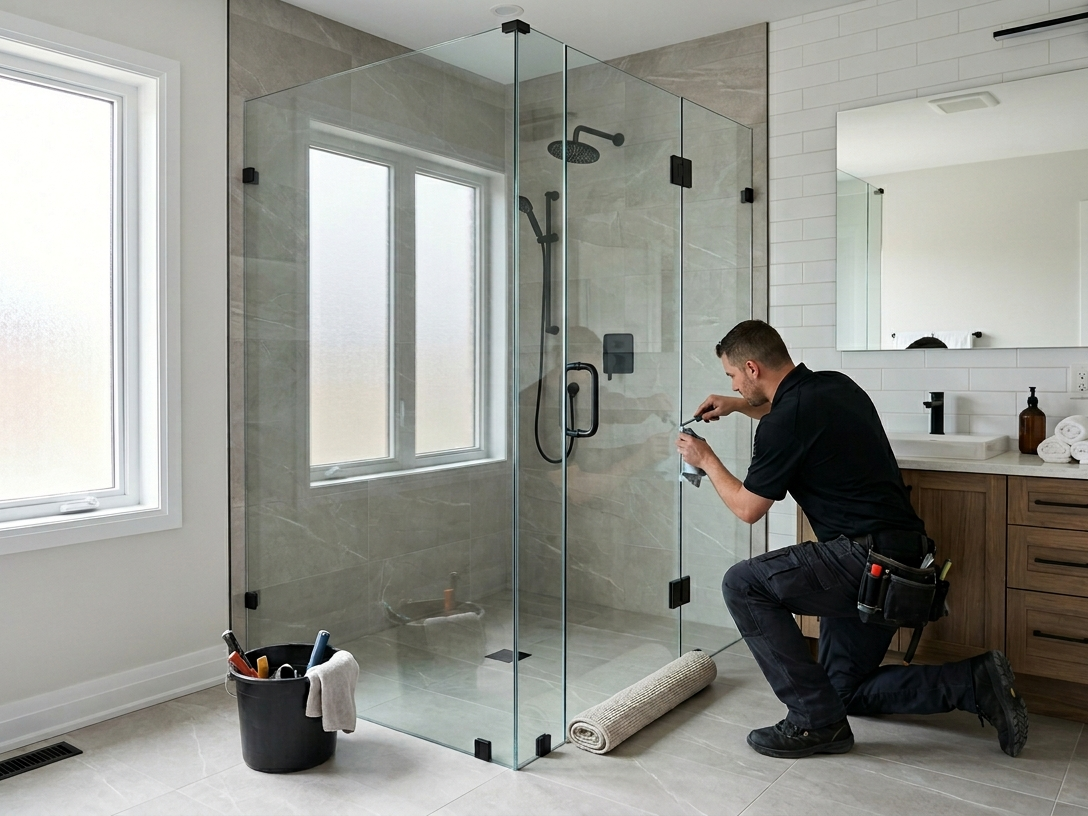
Installation day is when your new shower enclosure comes to life. Here’s what to expect during the process.
Preparation
Installers protect your bathroom flooring and fixtures before beginning work. If replacing an existing enclosure, old hardware and glass are carefully removed and disposed of properly.
Mounting Hardware
Wall-mounted channels, brackets, or hinges are installed first. For swinging shower doors and other frameless configurations, this requires drilling into wall studs or reinforced backing to support the weight of thick glass panels. Installers verify that every mounting point is level and plumb, which is critical for proper door operation.
Glass Panel Installation
Fixed panels are set first, secured with clamps or channels. Door panels follow, mounted on hinges or hung on tracks depending on your chosen operating style. Each panel is carefully positioned and adjusted for perfect alignment.
Sealing and Waterproofing
Silicone caulking creates watertight seals where glass meets walls, curbs, and adjacent panels. Door sweeps and drip rails direct water back into the shower. Installers ensure proper slope and drainage alignment to prevent water pooling.
Hardware Attachment
Handles, towel bars, and decorative hardware are mounted as final touches. Each component is checked for secure attachment and smooth operation.
Step 6: Quality Inspection and Walkthrough
Before considering the job complete, a thorough quality inspection verifies every detail. Door operation is tested—hinges should swing smoothly, sliders should glide effortlessly, and seals should maintain consistent contact.
Your installer walks you through proper door operation, cleaning recommendations, and maintenance tips specific to your installation. They’ll explain how to care for your hardware finishes and when to check seals for continued waterproofing.
Centennial Glass provides Ottawa’s only 2-year workmanship guarantee, covering any installation-related issues that may arise.
Timeline Overview
| Phase | Duration |
| Consultation and measurement | 1–2 visits |
| Design finalization | 1–3 days |
| Custom fabrication | 2–3 weeks |
| Installation | 2–6 hours (most single-day) |
| Total project timeline | 3–4 weeks typical |
Learn more about why homeowners choose us for their shower glass projects.
Preparing Your Bathroom for Installation Day
To ensure a smooth installation experience, complete all tile work, painting, and plumbing before your measurement appointment. Remove personal items from the shower area and ensure clear access to the bathroom. If you’re in an upper-floor bathroom, confirm the installer has a clear path for carrying large glass panels.
For bathtub glass door installations, ensure the tub surround is complete and the tub edge is clean and ready for hardware mounting.
Common Questions About Installation
How long does installation take? Most standard installations complete in 2–4 hours. Complex multi-panel enclosures or steam shower installations may require a full day.
Can I use the shower the same day? Silicone caulking requires 24 hours to cure fully. Plan to avoid using your new shower for at least one day after installation.
Do I need a building permit? Standard shower door installation in Ottawa does not require a permit. However, if your project involves plumbing relocation or structural changes, permits may be necessary.
What if my walls aren’t perfectly straight? Our technicians encounter this frequently in Ottawa homes. Adjustable hardware, precision shimming, and custom-cut glass accommodate imperfect conditions. If you have an existing enclosure with minor issues, professional shower door repair may be all that’s needed before upgrading.
Start Your Installation Today
Ready to upgrade your bathroom with a professionally installed glass shower door? For a detailed breakdown of what to budget, see our glass shower door cost guide. Visit our showroom at 855 Industrial Ave., Ottawa, to explore options and begin the process. Contact us or call 613-518-8125 to schedule your free consultation.