
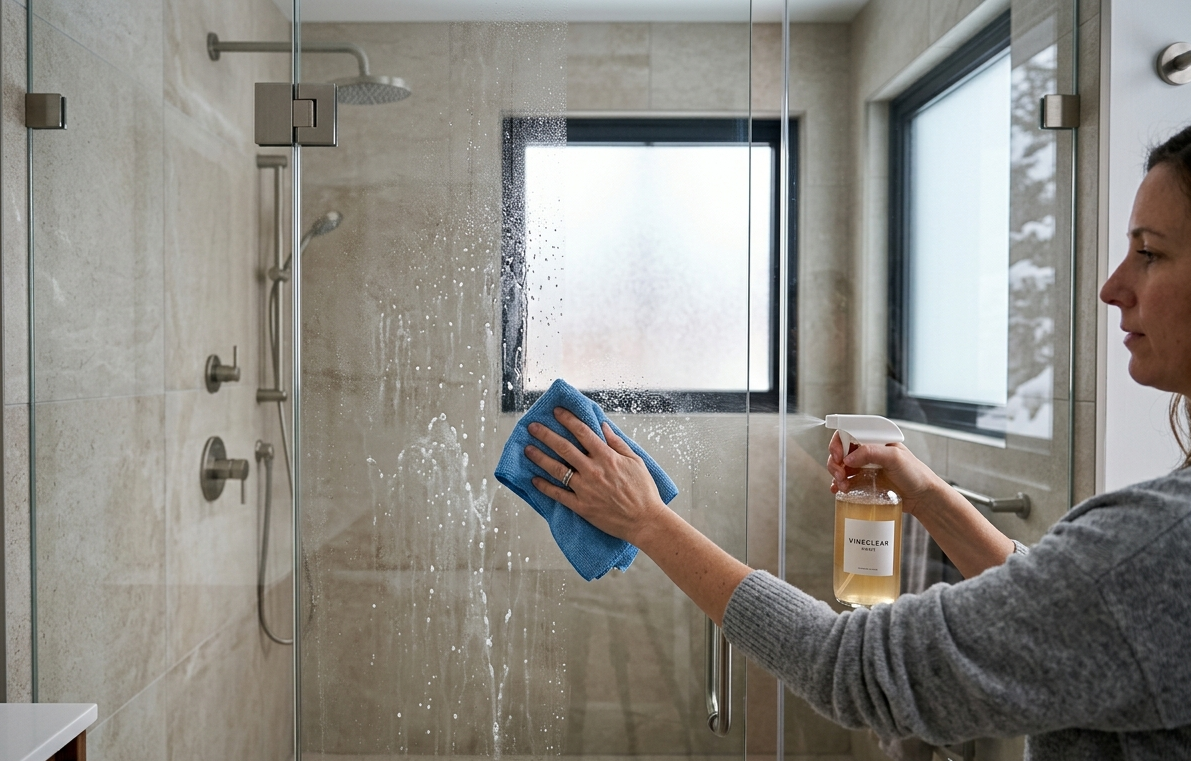
Ottawa’s water supply contains moderate levels of calcium and magnesium minerals that leave stubborn white deposits on glass surfaces over time. Without proper maintenance, these hard water stains can cloud your beautiful glass shower enclosure and diminish its clarity. The good news? A consistent cleaning routine keeps your shower doors sparkling with minimal effort.
This guide provides practical, Ottawa-specific maintenance advice to protect your investment and keep your glass looking brand new for decades.
Understanding Ottawa’s Hard Water Challenge
The City of Ottawa draws water from the Ottawa River, treating it at facilities in Lemieux Island and Britannia. While the water meets all Health Canada standards, it contains dissolved minerals—primarily calcium carbonate—that deposit onto glass surfaces as water evaporates. These mineral deposits appear as white, chalky spots or a hazy film that worsens over time if left untreated.
Hard water stains differ from soap scum. Soap scum is a waxy film caused by soap reacting with minerals, while hard water stains are mineral deposits left behind after evaporation. Most Ottawa homeowners deal with both simultaneously, requiring a two-pronged cleaning approach.
Daily Maintenance: The 30-Second Habit
The single most effective maintenance practice takes just 30 seconds: squeegee your glass doors after every shower. This simple habit removes water droplets before they evaporate and leave mineral deposits. It’s the difference between occasional deep cleaning and fighting stubborn buildup.
Keep a quality squeegee inside your shower—silicone-blade models work best on glass. Start at the top of the door and pull downward in smooth, overlapping strokes. Follow with a quick wipe of hardware and seals using a microfibre cloth.
This daily practice alone reduces deep cleaning frequency by 70–80%, protecting both frameless and framed shower doors equally.
Weekly Cleaning Routine
Set aside 10–15 minutes weekly for a thorough glass cleaning. This prevents buildup from reaching the point where aggressive scrubbing becomes necessary.
Natural Cleaning Solution
Mix equal parts white vinegar and warm water in a spray bottle. For extra cleaning power, add one tablespoon of dish soap per cup of solution. This combination effectively dissolves both soap scum and light mineral deposits without damaging glass, hardware, or seals.
Spray the solution generously across all glass surfaces, including door panels and fixed panels. Allow it to sit for 5–10 minutes to break down deposits. Wipe with a non-abrasive microfibre cloth or soft sponge using circular motions. Rinse thoroughly with warm water, then squeegee dry.
For Framed Door Tracks and Seals
Framed and sliding shower doors require additional attention to tracks, channels, and frame crevices where moisture and residue accumulate. Use an old toothbrush dipped in your vinegar solution to scrub tracks and seals. Rinse thoroughly and dry to prevent mould growth.
Hardware Care
Wipe hinges, handles, and clamps with a soft damp cloth during weekly cleaning. Avoid abrasive cleaners on hardware finishes, especially matte black and brushed gold, which scratch easily. A small amount of dish soap on a microfibre cloth effectively cleans hardware without damage. For details on available finish options, browse our selection of glass shower hardware.
Monthly Deep Cleaning
Once monthly, perform a more intensive cleaning to address any buildup your weekly routine may miss.
Tackling Stubborn Hard Water Stains
For established mineral deposits that vinegar alone won’t remove, try these escalating approaches:
Baking soda paste: Mix baking soda with enough water to create a thick paste. Apply to stained areas and gently scrub with a non-abrasive sponge. The mild abrasive action lifts deposits without scratching tempered glass. Rinse and squeegee dry.
Lemon juice treatment: Fresh lemon juice contains citric acid that dissolves calcium deposits effectively. Apply directly to stains, allow 10–15 minutes of contact time, then scrub gently and rinse.
Commercial glass cleaners: Cleaners specifically formulated for shower glass—like Centennial Glass Cleaner—are designed to tackle hard water deposits without harming glass coatings, seals, or hardware. These streak-free formulas maintain long-term clarity and are safe for all glass shower enclosures.
What to Avoid
Never use abrasive scrubbing pads, steel wool, or harsh chemical cleaners on shower glass. These can scratch tempered glass surfaces, creating micro-abrasions that actually attract and hold more mineral deposits. Avoid bleach directly on hardware, as it corrodes metal finishes over time.
Never use razor blades or metal scrapers. While sometimes recommended online, these risk permanently scratching glass and damaging protective coatings.
Protective Glass Coatings
Protective coatings represent the best long-term defence against Ottawa’s hard water. These hydrophobic treatments cause water to bead and roll off glass rather than sitting and evaporating, dramatically reducing mineral deposit formation.
Factory-Applied Coatings
Many professional installations include protective coatings applied during fabrication. These treatments bond to the glass surface at a molecular level, providing years of protection. Ask about coating options when ordering your custom shower enclosure. If you want a textured finish that also helps mask water spots between cleanings, pattern glass showers are worth considering.
Aftermarket Coatings
If your existing shower doors lack factory coating, aftermarket products can be applied to clean, dry glass. These typically require reapplication every 6–12 months but significantly reduce cleaning frequency between applications.
Maintaining Different Door Styles
Frameless Doors
Frameless installations are easiest to maintain since fewer components mean fewer places for buildup. Focus on glass surfaces and minimal hardware points. Periodically check hinge tightness and door alignment, particularly on swinging shower doors where heavy glass puts consistent stress on hinges.
Framed Doors
Pay extra attention to frame channels and tracks where water sits longest. Ensure weep holes (small drainage openings in bottom tracks) remain clear so trapped water can drain.
Sliding Doors
Sliding shower door tracks require the most maintenance attention. Clean tracks monthly with a vinegar solution and toothbrush. Lubricate rollers annually with silicone-based lubricant (never petroleum-based products) to maintain smooth operation. Bathtub glass shower doors in sliding configurations are especially prone to track buildup since water from the tub surround constantly flows toward the bottom rail.
Seasonal Considerations for Ottawa
Spring/Summer: Increased humidity means more moisture in your bathroom. Run exhaust fans during and 15–20 minutes after showers. Open bathroom windows when weather permits to reduce ambient humidity.
Fall/Winter: Ottawa’s dry heated air can cause silicone seals to dry and shrink over time. Inspect seals annually and recaulk any areas showing gaps or separation. Dry winter air does reduce mineral spotting between cleanings.
Year-round: Ensure your bathroom exhaust fan is adequately sized and functioning properly. Poor ventilation accelerates mould growth on seals and grout regardless of season.
When to Call a Professional
Most maintenance is straightforward, but contact a professional if you notice cracked or chipped glass (a safety concern requiring immediate attention), loose or misaligned doors, persistent leaking around seals, or hardware that has corroded beyond cleaning.
Centennial Glass offers shower door repair services for hardware adjustments, seal replacements, and glass replacement when needed. Our 2-year workmanship guarantee covers installation-related issues, and professional shower door installation from the start also minimizes future maintenance problems by ensuring proper alignment and sealing. Learn more about why homeowners choose us for their shower glass projects.
Protect Your Investment
A glass shower door is a long-term investment that rewards consistent care. The few minutes spent on daily squeegeeing and weekly cleaning preserve your shower’s beauty and clarity for decades. For more on choosing the right enclosure for your bathroom, see our complete glass shower doors guide.
Visit our showroom at 855 Industrial Ave., Ottawa, for cleaning product recommendations and maintenance advice specific to your shower enclosure. Contact us or call 613-518-8125 with any maintenance questions.